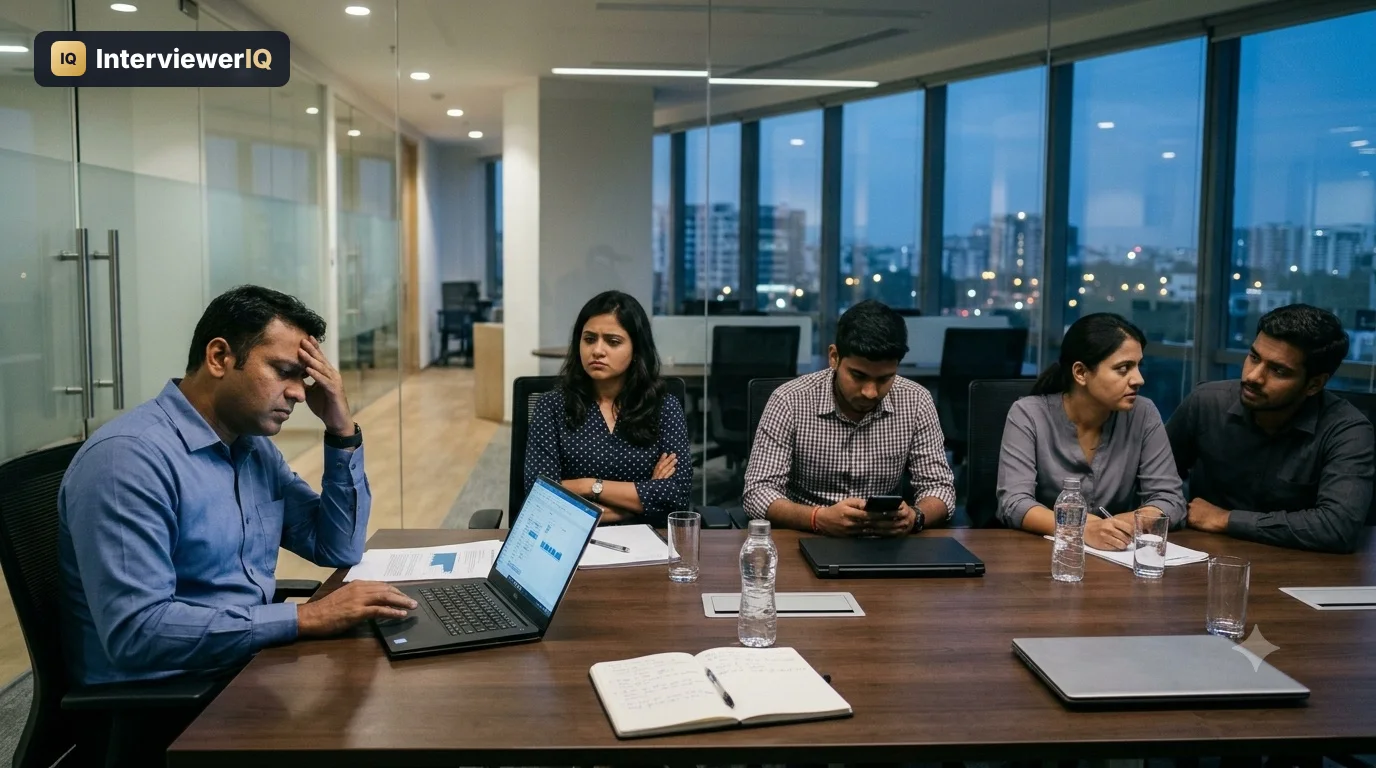
A wrong hire rarely looks like a disaster on day one. It looks like a confident person who interviewed well. The damage comes slowly: a missed target here, a tense meeting there, and one day you notice your best people have stopped trying.
Every wrong hire was once a “yes” in an interview room. That is why interviewing is not an HR formality. It is one of the most important decisions a recruiter, an HR professional, a hiring manager or a leader makes, and most of us were never trained to make it.
Case 1: The wrong person in a performing team
Picture a sales team that is doing well. Targets are met, people help each other, the energy is good. A new member joins who spoke brilliantly in the interview: big numbers, big words, great confidence.
Three months later the numbers are not coming. Colleagues start covering for the gaps. The manager spends more and more time on one person. The strongest performer thinks, “I work twice as hard and get the same treatment”, and quietly updates their resume.
The team did not lose one seat. It lost its rhythm, its trust, and maybe its best person. All of it traces back to one interview where nobody asked, “What did you do to get those numbers?”
Case 2: The wrong manager leading a good team
Now flip it. A capable team gets a new manager who looked impressive on paper and in the interview. But leading people is different from talking about leading people.
- Favouritism creeps in. One or two people get the good accounts and the credit. The rest stop raising their hand.
- The team stops listening. Instructions are followed on the surface and ignored in spirit. Meetings become silent.
- Strong people cannot be driven. The manager feels threatened by competent team members instead of using them.
- Good people leave. People join companies, but they often leave managers.
Every one of these problems was visible in the interview, if someone had known how to look. How did they handle a team member who disagreed? What did they do when someone better than them joined the team? Those are past-behaviour questions, and the answers are there for the interviewer who probes.
Case 3: The wrong senior hire
The higher the role, the wider the ripple. A wrong senior hire changes how decisions are made, who gets promoted, and what “good work” means in the team. Culture is not what is written on the wall. It is what leaders do every day, and you choose those leaders in an interview.
What a wrong hire really costs
- Time: months of the manager’s attention spent fixing, coaching and covering.
- Money: salary, hiring cost, notice periods, and then hiring again.
- People: the good performers who leave because of one wrong colleague or manager.
- Customers: the relationships and deals that slip while the team struggles.
- Your credibility: as the recruiter, HR partner or manager who said yes.
Domain expertise is not enough
Many managers believe, “I know my domain, so I will know a good person when I see one.” Domain knowledge tells you what good work looks like. It does not tell you whether this person actually did that work, or just knows how to describe it.
A good talker and a good performer can sound exactly the same for forty-five minutes. Only interviewing skill separates them: asking about real past situations, probing the “we” until you hear the “I”, and rating on evidence instead of a feeling. The best interviewers combine both: deep domain knowledge and a structured way to test it.
Who must master this skill
- Recruiters: you are the first filter. A weak screen sends the wrong people forward and wastes everyone’s time.
- HR professionals: you own the process. If the process runs on gut feel, every hire is a gamble.
- Hiring managers: you make the final call, and you live with the result every single day.
- Leaders and founders: you set the bar. Every senior or early hire shapes the culture for years.
Not a bucket-list skill
Most people put interviewer training on the “someday” list. Someday when there is time, when there is a budget, when there is a workshop. Meanwhile, the hiring goes on, with real candidates and real consequences.
Ask yourself honestly:
- Was I ever properly trained to interview, or did I just start doing it?
- In my last interview, did I probe at least one claim until I heard what the candidate did?
- Can I explain every rating I gave with one line the candidate actually said?
- Has anyone ever given me honest feedback on how I interview?
- Have I ever hired someone who interviewed well and then struggled?
If even one answer made you pause, interviewing deserves a place on your priority list, not your bucket list.
How InterviewerIQ helps
You cannot learn to swim by reading about water, and you should not learn to interview on real candidates. InterviewerIQ gives you a safe place to build the skill before the interview that matters:
- Realistic AI candidates for your role and industry, who over-claim, hesitate and dodge like real people.
- The Interview Guide shows what to ask for each competency, and live nudges flag a weak question in the moment.
- Evidence-based scoring: you rate each competency 1 to 5, and the report checks whether your rating is backed by what the candidate said.
- An honest report on your interviewing, with your best moment, the one fix for next time, and Skill Path coaching on your weakest skill.
- Private by design: no real candidate, no one watching, so you can make mistakes and learn from them.
The next wrong hire will not announce itself. It will walk in confident, prepared and likeable. The only question is whether the person across the table is ready.
Run this interview with a lifelike AI candidate
Use this exact method on InterviewerIQ — real-time coaching while you interview and an evidence-based score afterwards. 2 free interviews.
Start free